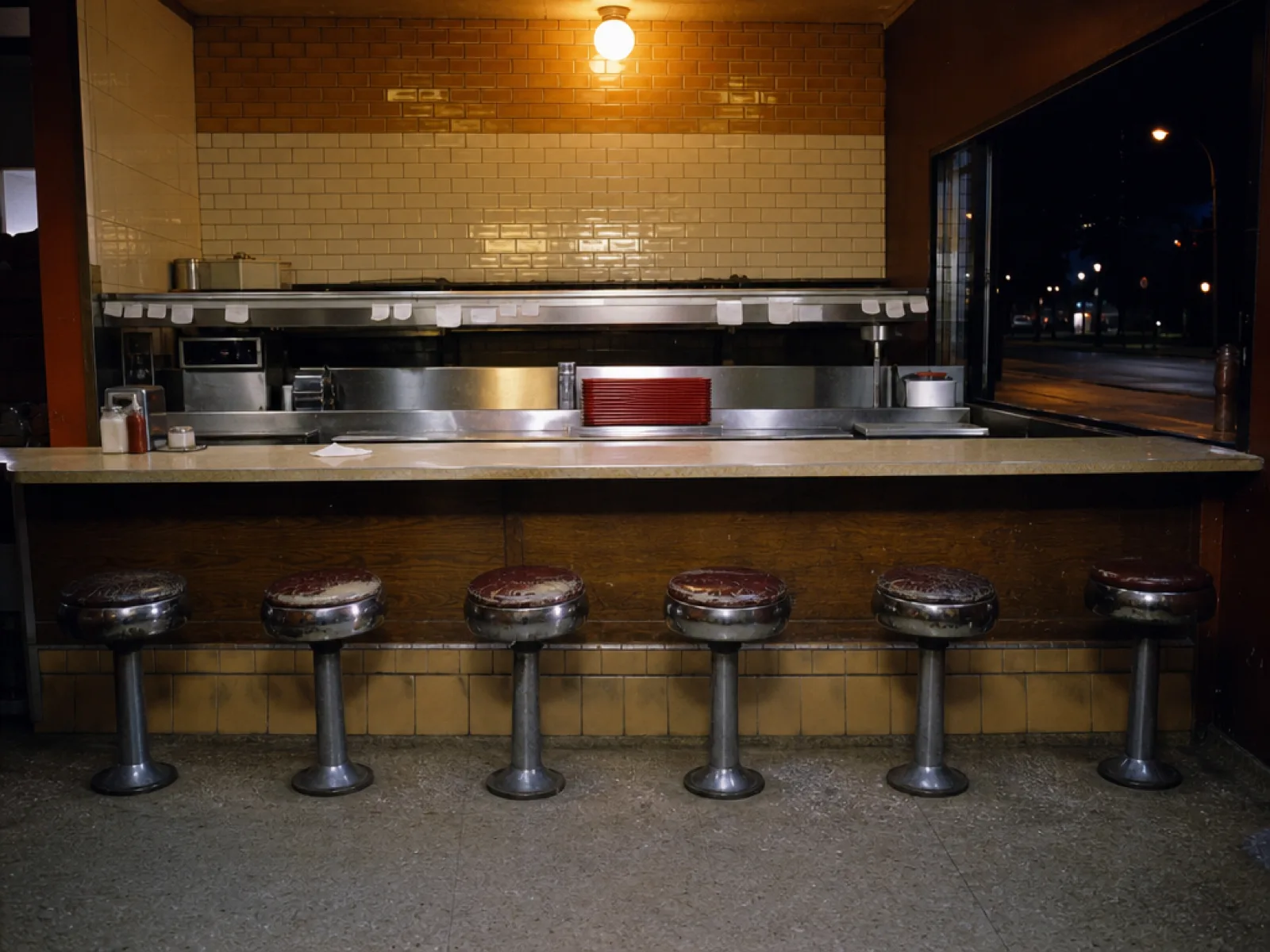
the kitchen runs on paper
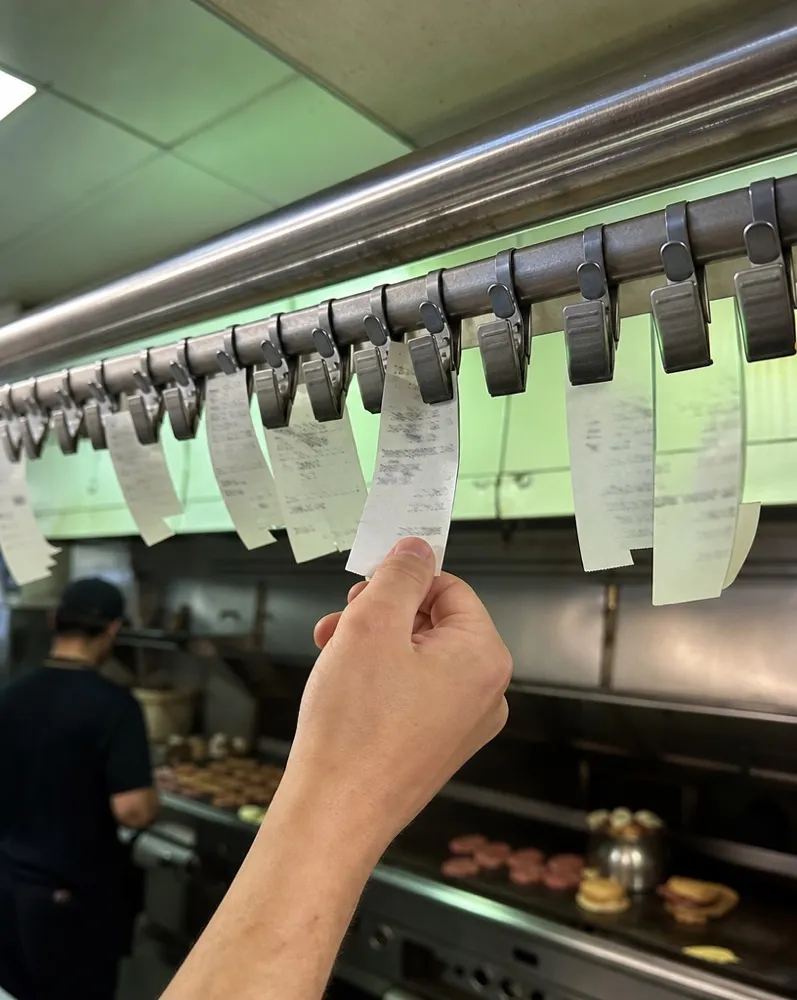
The screen we bought — In 2019 we put in a kitchen display system, the kind every consultant tells you to buy. Orders appeared on a monitor over the flat-top, sorted oldest first, with a timer counting up on each one. It cost about four thousand dollars including the mount. We ran it for five months.
Why it slowed us down — The screen thinks in orders. The flat-top thinks in patties. If three tickets in a row each want two singles, that is six patties in one pass, one press, one flip, done in the time it takes to cook two. On paper the cook grabs all three tickets, slides them together, and cooks them as one. On the screen those three orders were three separate boxes and the cook worked them in the order the timer said to.
Position is the status — A ticket starts at the left end of the rail. When it goes on the griddle it moves to the middle. When the food is up it moves to the right and gets pulled. Anyone can walk past the rail and know exactly where every order in the building stands without touching anything. We never found a screen that told you that from six feet away.
Online orders still print — Delivery and pickup orders come in through the tablets at the pass and a small printer spits them onto the same rail as everything else. One queue, one rail, one place to look. Two queues was the other thing that went wrong in 2019.
What we gave up — Data. The screen tracked average ticket times and could tell you that Tuesday at 7 PM ran 40 seconds slower than Tuesday at 6. Now we count the spike at close and that is the whole report. We decided that a cook who can read the rail in one glance is worth more than a chart nobody was reading.
The one rule — Nothing goes on the rail that has not been rung in. A verbal order from the floor is how tickets get lost and how somebody eats for free at 1 AM. If you told a person at the counter and it did not come out, ask us, because the ticket is either on the rail or it never existed.