we grind the beef every morning
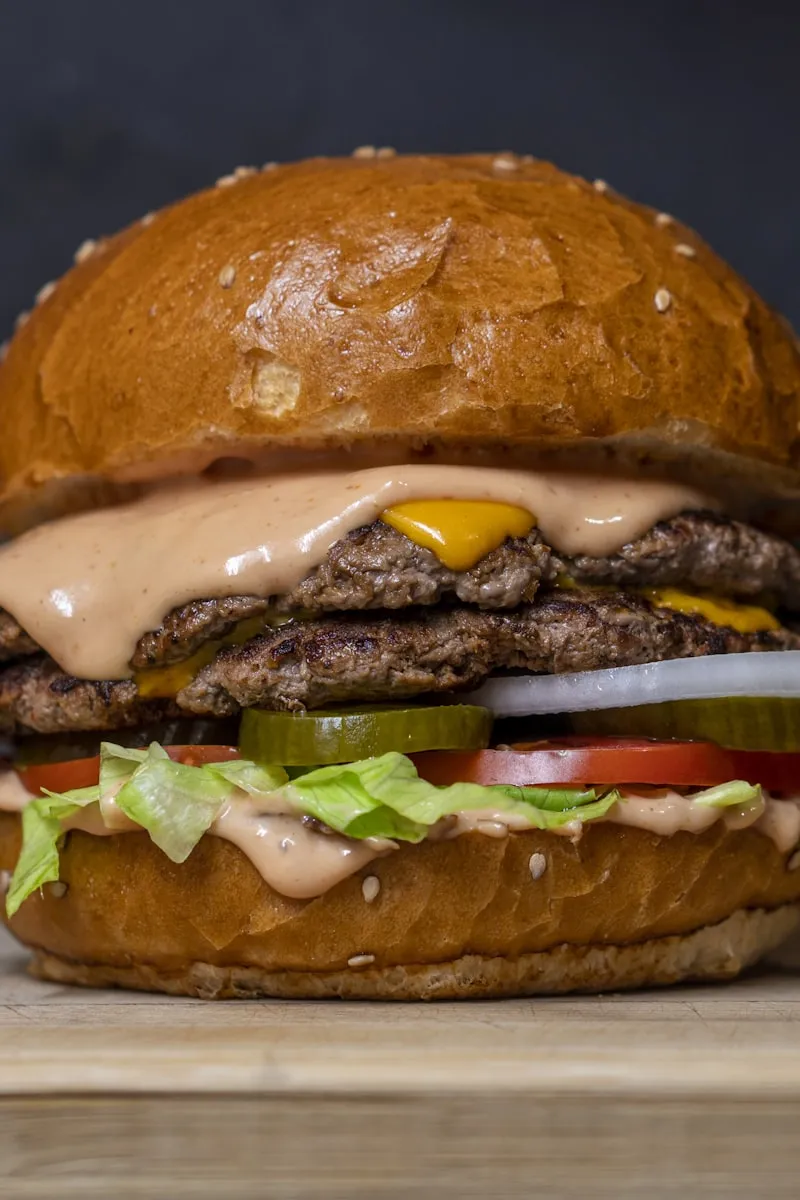
Two cuts, one blend — We use chuck for fat and brisket for flavor, in a roughly 70/30 mix that lands around 20% fat. That number matters more than the cuts do. Below 18% the patty dries out on a hot flat-top; above 25% it shrinks too much and the crust gets greasy instead of crisp.
Ground at nine, cooked by two — The grinder runs every morning at 9 AM for the day's service. Beef that's been ground and sitting for days loses its texture — the fat smears, the strands compact, and you end up with something closer to a meatloaf than a burger. Fresh grind stays loose, and loose is what lets a smash burger spread thin and lace at the edges.
Portioned by hand, never pressed — Each ball gets weighed to a hair over three ounces and set on a tray. Nobody presses them into pucks. The first and only time a patty gets pressed is on the griddle, under a stiff spatula, for about ten seconds. That single press is what makes the crust.
Why the smash works — When loose ground beef hits 450°F steel and gets flattened, the surface moisture boils off fast and the sugars and proteins brown hard. That's the crust you're paying for. A pre-formed patty has already had its air squeezed out, so it steams before it browns and never gets there.
What we do with the trim — Nothing goes in the bin. Trim from the brisket gets ground into the next batch, and the fat cap renders down for the flat-top. If you've wondered why the fries taste like the burgers, that's why.